
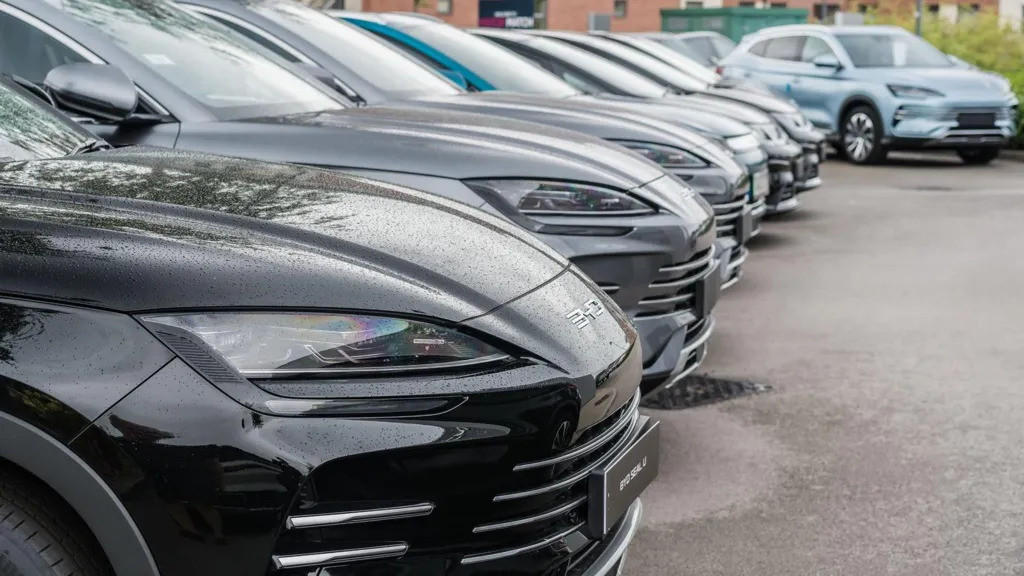
China’s BYD Takeover of Tesla: A New Era in the Global EV Race
In a landmark shift in the global electric vehicle (EV) market, China’s BYD has officially overtaken Tesla as the world’s top EV seller — marking a historic turning point for the automotive industry. This dramatic development reflects changing consumer preferences, evolving market dynamics, and intensifying competition between East and West in the race toward electrification.
BYD Tops Tesla in Global EV Sales
Chinese automaker BYD has surpassed Tesla to become the world’s largest electric car seller for the first time. In 2025, BYD sold approximately 2.26 million fully electric vehicles, significantly ahead of Tesla’s 1.64 million deliveries, signaling a major shift in global market leadership. (The Guardian)
This victory is especially significant because it’s the first year BYD has claimed the top spot based on pure EV sales, not just combined EV and hybrid totals — marking a true overtaking of Tesla in the core battery-electric segment. (Business Insider)
Why BYD Is Winning the EV Battle
1. Strategic Product Lineup and Pricing
BYD’s product strategy spans economy EVs like the Seagull and Dolphin to more premium offerings, appealing to a broader audience than Tesla’s relatively higher-priced lineup. This has helped BYD attract cost-conscious buyers in Asia, Europe, and emerging markets — driving explosive sales growth. (Business Insider)
2. Strong Domestic and Global Growth
Backed by China’s extensive EV ecosystem — including manufacturing scale, supply chain integration, and government support — BYD’s domestic market remains robust. At the same time, its exports to Europe have surged, with BYD outselling Tesla in some European markets for the first time. (Reuters)
3. Technology and Innovation
Beyond sales figures, BYD has invested heavily in fast-charging technologies and advanced EV platforms that match or exceed traditional benchmarks, cementing its competitive edge. (The Verge)
What’s Happening at Tesla?
Tesla, long seen as the leader in EV innovation, has faced several headwinds:
- Declining deliveries — Tesla’s global vehicle shipments fell in 2025, marking the second consecutive annual decline. (Reuters)
- End of U.S. tax incentives — The expiration of the $7,500 federal EV tax credit in the U.S. dampened domestic demand. (Reuters)
- Stiff competition — Chinese and European automakers have eroded Tesla’s market share, particularly in key regions. (The Times of India)
Despite this, Tesla remains a major brand with strong valuation and future ambitions, including autonomous driving technologies, robotaxis, and AI solutions. (Wikipedia)
The Global EV Market in 2026 and Beyond
The BYD-Tesla story reflects a bigger trend: the electric vehicle landscape is becoming more global and competitive. Chinese EV makers are rapidly scaling production and exports, while Western automakers are also increasing investments in electrification — signaling that the EV race is no longer a two-horse competition but a multinational sprint. (Reuters)
Conclusion: What This Means for Consumers and Investors
BYD’s rise isn’t just about numbers — it’s about reshaping where and how electric vehicles are made, marketed, and bought. As the EV revolution accelerates, buyers can expect more choice and competitive pricing. Investors, meanwhile, will watch closely to see how Tesla responds and how Chinese firms like BYD expand further into global markets.


Leave a Reply